
The Best Virtual Tours You Can Explore Online in 2026
From the Louvre to the surface of Mars, these are the best virtual tours you can explore online right now — museums, national parks, landmarks, space missions and AI-generated worlds.
Key Takeaways
- World-class museums including the Louvre and the Vatican offer free virtual tours.
- US National Parks and global landmarks are fully explorable in 360.
- NASA lets you walk the International Space Station and the surface of Mars.
- Universities use virtual campus tours to reach international students.
- AI platforms like 360Worlds now generate explorable environments from scratch.
One of the best ways to understand what virtual tours can do is simply to explore great ones. The tours below span museums, national parks, landmarks, space and education — all free, all in your browser, no downloads needed.
If you want the full background on how these experiences are built, our ultimate guide to virtual tours covers the technology, history and industry end to end.
World-class museum tours
Museums were among the first institutions to embrace virtual tours seriously, and they remain some of the best-produced experiences online.
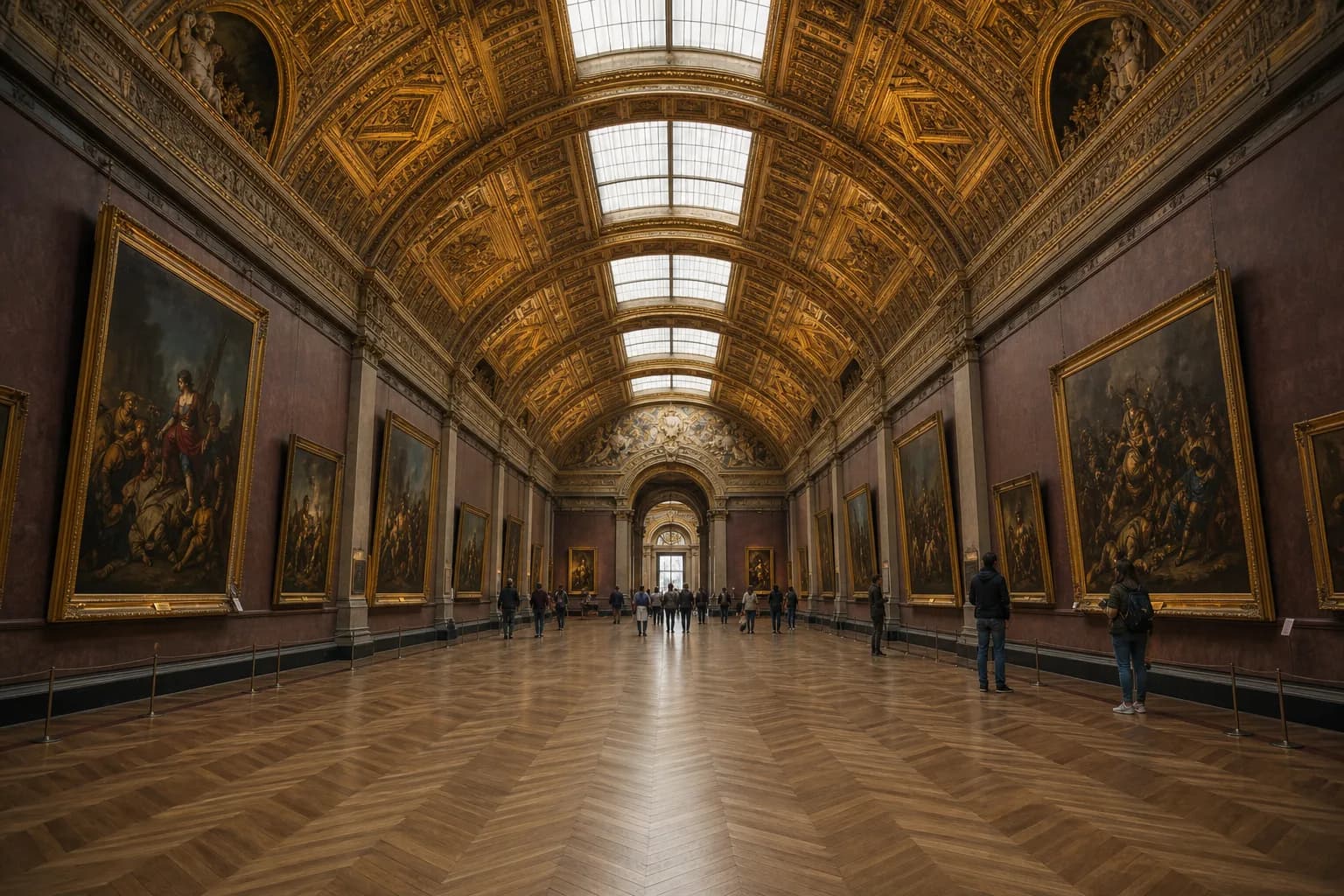
The Louvre, Paris
The world's most-visited museum offers online tours of key spaces, including the Galerie d'Apollon and the remains of the medieval moat beneath the museum. You can linger in front of works that in person are viewed over a crowd of raised phones.
The British Museum, London
The British Museum partnered with Google to create one of the most ambitious museum experiences online — you can virtually walk the Great Court and explore thousands of artefacts along an interactive timeline of world history.
The Vatican Museums, Rome
The Vatican's 360 tour of the Sistine Chapel is a masterclass in what the format does best: stand beneath Michelangelo's ceiling in silence, look straight up and take as long as you like — something physically impossible in the packed chapel itself.
The Smithsonian, Washington DC
The Smithsonian National Museum of Natural History offers self-guided, room-by-room 360 tours of its permanent exhibits and even past exhibitions that no longer exist physically — a reminder that tours also serve as an archive.
The Van Gogh Museum, Amsterdam
Google Arts & Culture's capture of the Van Gogh Museum lets you drift through the world's largest collection of the painter's work, with gigapixel close-ups that show brushstrokes no museum barrier would ever let you approach. It demonstrates a strength of the format that gets little attention: virtual visitors can get closer than physical ones.
The Rijksmuseum, Amsterdam
The Rijksmuseum's online experience pairs 360 gallery views with curated digital routes through Rembrandt and Vermeer. Its "Masterpieces up close" approach — tour plus expert narrative — is precisely the hotspots-plus- narration pattern that makes commercial tours convert.
The Guggenheim, New York
Worth visiting virtually for the building alone: Frank Lloyd Wright's spiral rotunda is one of the most distinctive interior spaces ever captured in 360, and gliding up the ramp remotely gives a better sense of the architecture than photographs ever have.
Historic homes and haunting places
A different category from museums — spaces whose power is atmosphere rather than collections:
- Anne Frank House, Amsterdam — the secret annex recreated room by room, with context at every turn. One of the most affecting uses of the medium anywhere online.
- Buckingham Palace — the State Rooms in 360, including angles the public tour never offers.
- Château de Chambord — Loire Valley grandeur, drone exteriors and interior panoramas combined.
- Winchester Mystery House, California — the famously nonsensical mansion offers a paid virtual tour of corridors and stairways to nowhere, proving people will pay for remote access to a compelling space.
National parks and natural wonders
Yellowstone National Park
The US National Park Service publishes virtual visits to Yellowstone's geysers, hot springs and canyons — including spots that are hard to reach on foot.
The Grand Canyon
Google's Street View trekker captured trails down into the canyon, so you can descend the Bright Angel Trail from your sofa and get a genuine sense of the scale.
The Great Barrier Reef
Underwater 360 imagery lets you swim the reef among turtles and coral — virtual tourism reaching places most travellers will never physically go.
Global landmarks
Google Arts & Culture and individual heritage bodies have made many of the world's most famous structures explorable:
- The Taj Mahal — walk the gardens and the marble platform in 360.
- Machu Picchu — aerial and ground-level panoramas of the Inca citadel.
- The Eiffel Tower — views from the summit without the queue.
- Angkor Wat — temple corridors captured before crowds arrive each day.
- The Palace of Versailles — the Hall of Mirrors, empty, which visitors never see in person.
What these tours share is honest presentation: the space, captured well, with the viewer left in control. That principle applies just as much to a three-bed semi as to a French palace — you can see it in our own property tour examples.
Space: the ultimate virtual tour
Space agencies produce some of the most remarkable immersive content online.
The International Space Station
NASA and ESA have captured the ISS in full 360, letting you float module by module through humanity's laboratory in orbit. The scale surprises people — it is far more cramped and more human than film sets suggest.
The surface of Mars
Stitched from NASA rover imagery, Mars surface tours let you stand in Jezero Crater and turn a full circle across an alien landscape. It is the purest example of the medium: a place no human has visited, explorable by anyone.
The Moon
Apollo landing sites have been recreated as explorable panoramas from mission photography — history preserved as a walkable space.
Education and campus tours
Universities have quietly become some of the biggest publishers of virtual tours. Oxford and Cambridge colleges, Ivy League campuses and hundreds of UK universities offer 360 open days — reaching international applicants who cannot fly in for a Saturday visit. Schools do the same for prospective parents.
The education story goes far beyond marketing, though. Teachers now take classes to the Colosseum during a history lesson and inside the human heart during biology. We cover this in depth in Virtual tours for education.
AI-generated worlds: the new frontier
Every tour above captures a real place with cameras. The newest category skips the camera entirely: AI-generated explorable environments.
Platforms like 360Worlds generate immersive 360 experiences from prompts — historical settings as they looked centuries ago, imagined worlds for storytelling, and educational environments no camera could ever photograph, like the inside of a volcano or a Roman street at market time. For education and entertainment, this removes the last constraint on virtual tours: reality itself.
We explore what generative AI means for the whole medium in How AI is changing virtual tours.
What businesses can learn from the best tours
Studying these experiences, a few lessons transfer directly to anyone publishing a commercial tour:
- Control is the magic. Every great tour hands the visitor the wheel. The Sistine Chapel tour is powerful because you choose where to look.
- Context multiplies value. The British Museum's timeline and NASA's module labels show how hotspots and narration turn "looking" into "learning". In a property tour, that is room dimensions and finish details.
- Accessibility is reach. Everything above works in a plain browser. Your tour should too — no app downloads, ever.
- Great capture matters. The tours that impress are sharp, level and well-lit. Equipment is part of it; preparation is most of it.
Publish something worth exploring
The same format that carries the Louvre works for a hotel, a school, a showroom or a three-bed semi. With 360tours.studio you can capture a space with any 360 camera, build an interactive tour with hotspots, floor plans and AI narration, and publish it to every device — including VR headsets.
Start with our interactive demo to feel the format, then see how to create a virtual tour for the step-by-step process. For the complete picture of the medium, return to the ultimate guide to virtual tours.
Frequently Asked Questions

The 360tours.studio Team
Virtual Tour Experts
We build interactive 360 virtual tour software for estate agents and property marketers.
Related Articles
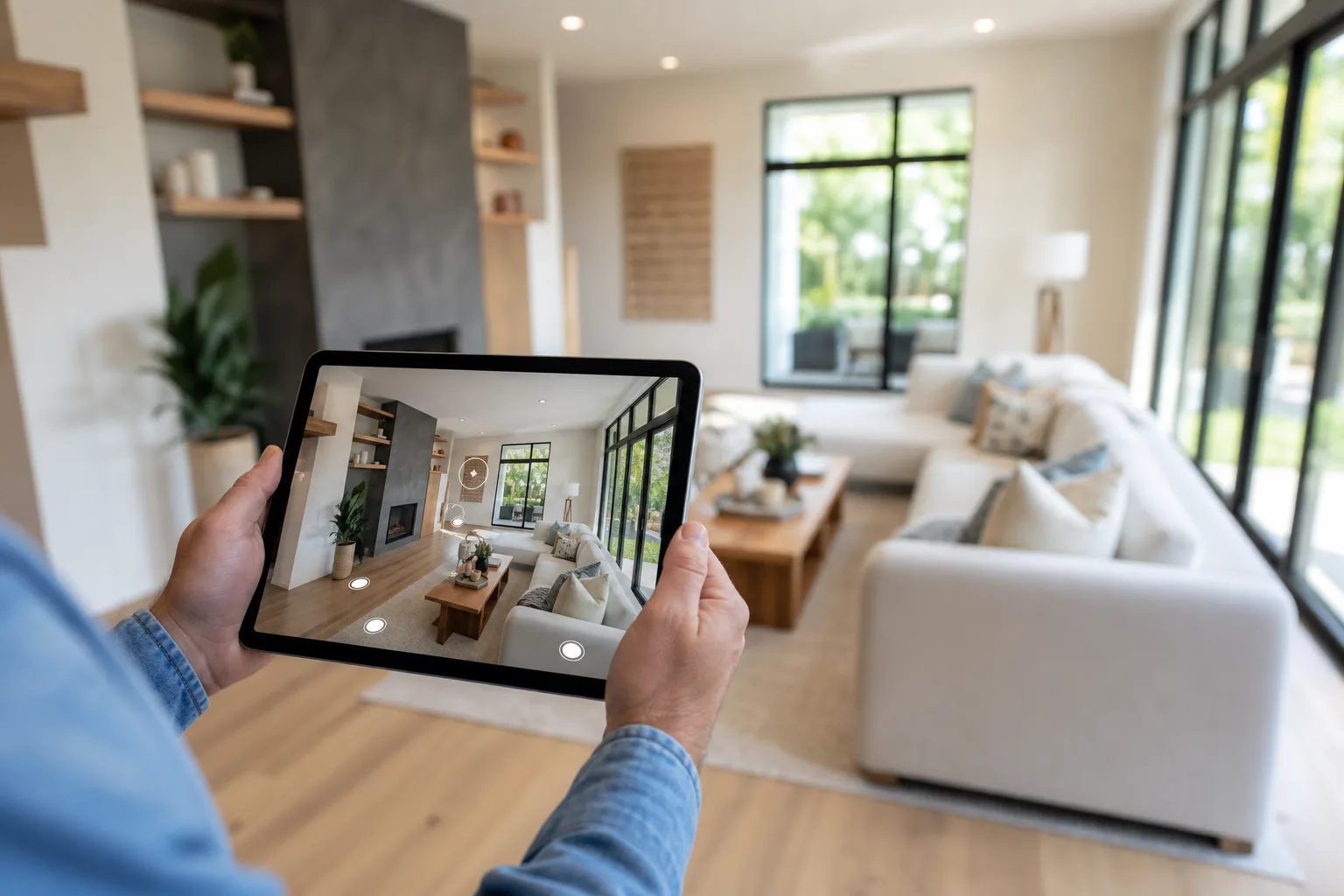
The Ultimate Guide to Virtual Tours (2026)
Everything you need to know about virtual tours: what they are, how they work, the technology behind them, the industries using them, and where AI and VR are taking immersive experiences next.
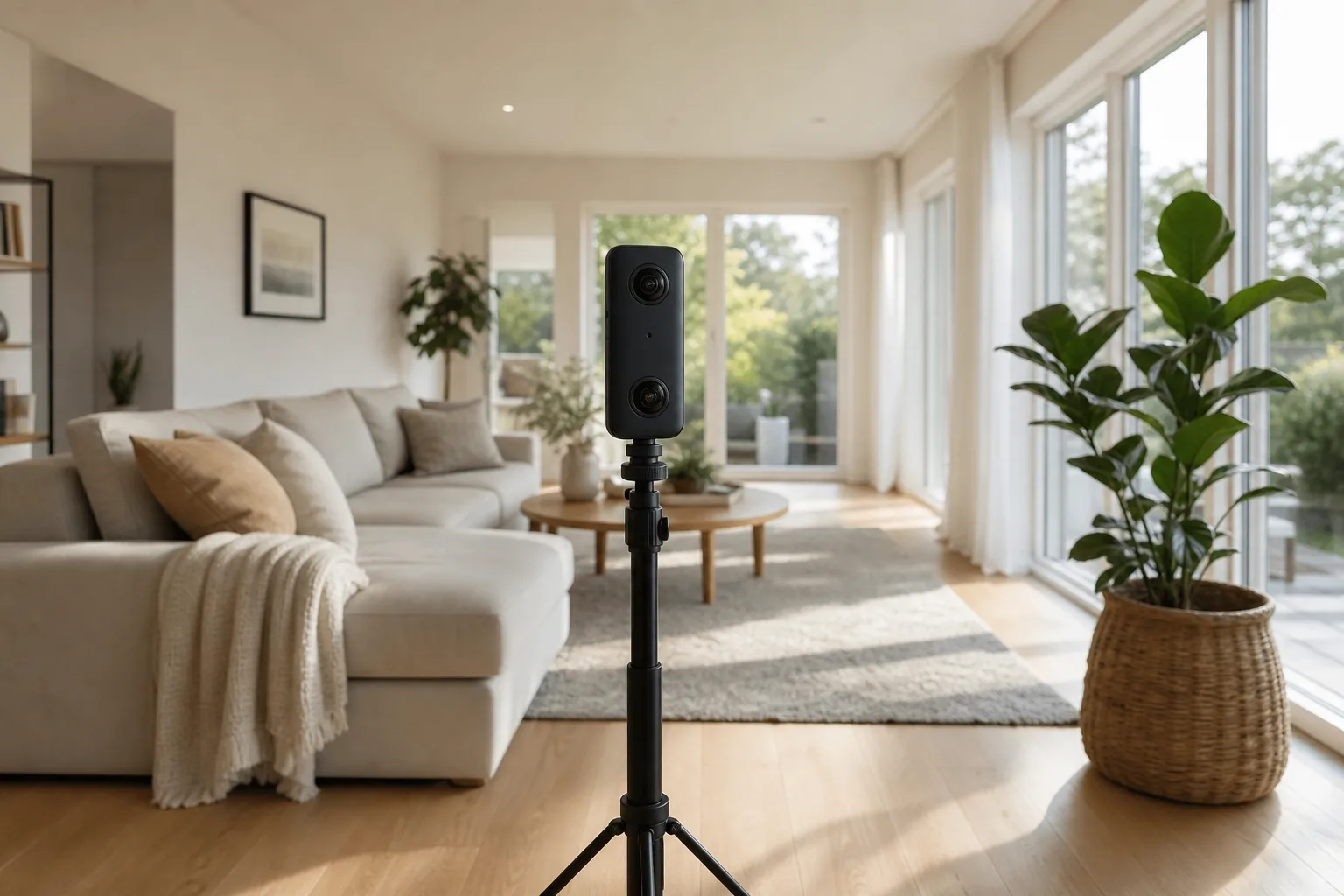
What Is a Virtual Tour? A Complete Beginner's Guide
New to virtual tours? This beginner's guide explains exactly what a virtual tour is, how 360 photos, hotspots, floor plans, audio and VR fit together, and how to view or create your first one.
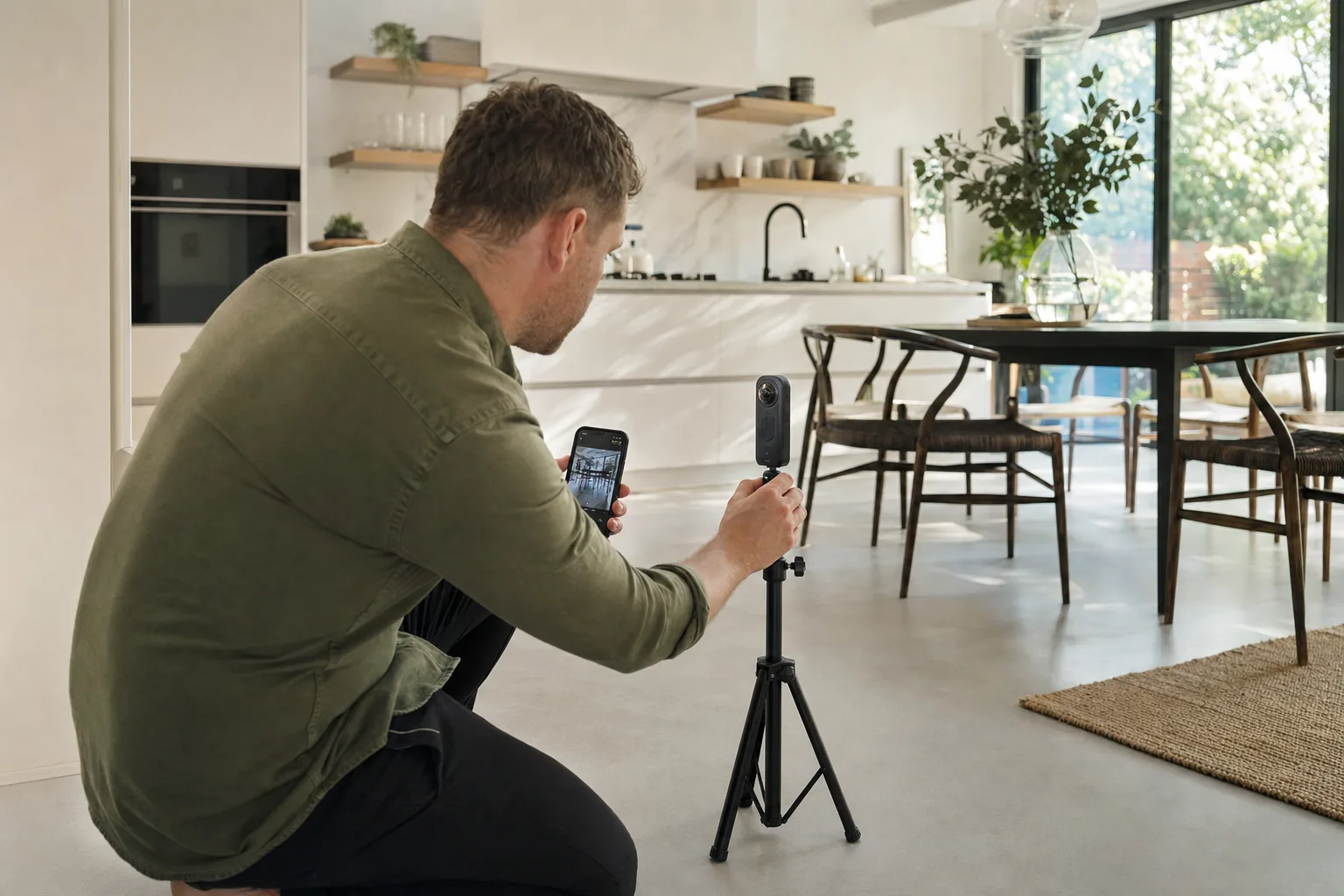
How to Create a Virtual Tour: The Complete Step-by-Step Guide
Learn how to create a professional virtual tour from scratch: choosing a 360 camera, shooting each room, editing panoramas, uploading, hosting and publishing — with realistic costs and timings.